ACM3 is a broadcast control and monitoring solution based on AoIP technology, which covers the management, signal routing, and system detection of various commonly used equipment in production, broadcasting, and main control rooms. It has a unified software management platform and can be tailored and combined according to different system sizes, usage scenarios, and application levels. It can be used to build separate broadcast control or monitoring systems, or to form an integrated broadcast control+monitoring system.
Functional module

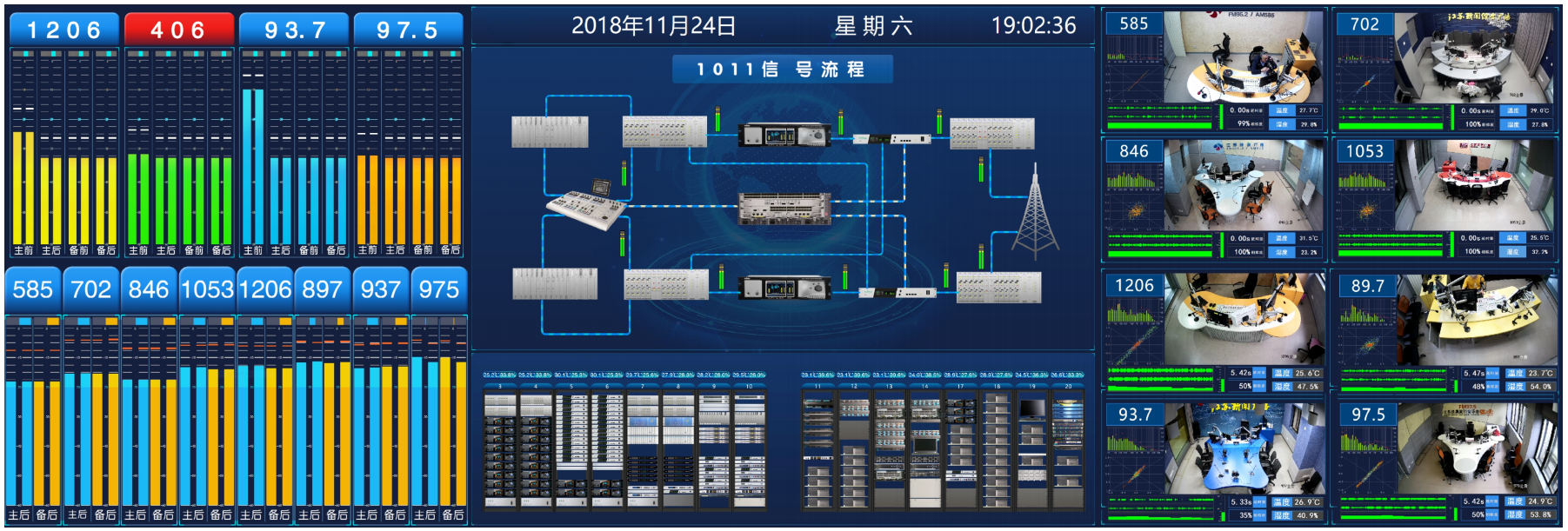
 Large screen display:The display content can be customized, including comprehensive level table (including channel related table), screen splitting rate comprehensive display diagram, equipment operation flowchart, etc. When an alarm occurs, the relevant display interface synchronizes feedback and can push the status and location information of abnormal devices.
Equipment Management:Discover and manage audio and non audio devices within the network, monitor the operational status of each device in real-time, and enable remote configuration, inspection, operation, timing, upgrades, and more. It also has asset management functions for data center equipment.
Large screen display:The display content can be customized, including comprehensive level table (including channel related table), screen splitting rate comprehensive display diagram, equipment operation flowchart, etc. When an alarm occurs, the relevant display interface synchronizes feedback and can push the status and location information of abnormal devices.
Equipment Management:Discover and manage audio and non audio devices within the network, monitor the operational status of each device in real-time, and enable remote configuration, inspection, operation, timing, upgrades, and more. It also has asset management functions for data center equipment.
Routing management:Responsible for establishing, analyzing, and maintaining inter device routing, internal device routing, and network routing. Under the management of a unified platform, the direction of signal flow can be created or edited in various ways to achieve audio signal allocation and scheduling.
Alarm Management:The setting of parameters for each alarm point, the execution of monitoring, the output and analysis of information, covering multiple routine alarm contents, as well as other items such as equipment failure, baseband and network interruption, environmental abnormalities, etc. After an alarm occurs, various methods can be used to promptly issue notifications and provide emergency response plans.
Monitoring management:Utilize the AoIP network matrix and internal monitoring routes of each device to pre listen and real-time monitor input and output nodes within the system.
Slow recording management:Record audio and surveillance videos 24/7 and specify playback time periods. Configure 4-64 tracks and support exporting program files.
Retrospective management:It can retrieve information such as the current moment's video, audio, mixer pusher position, equipment working status, power status, environmental status, etc. At the same time, the system's working status before and after the alarm point can be quickly traced back based on the alarm log, making it easier to analyze the cause of the fault.
noise analysis:Based on the audio comparison algorithm, calculate and present the delay, similarity, and noise values between the reference audio and the comparison audio. When the similarity is too low or the noise value is too high, an alarm prompt is given to provide technical support for noise monitoring of the broadcasted program.